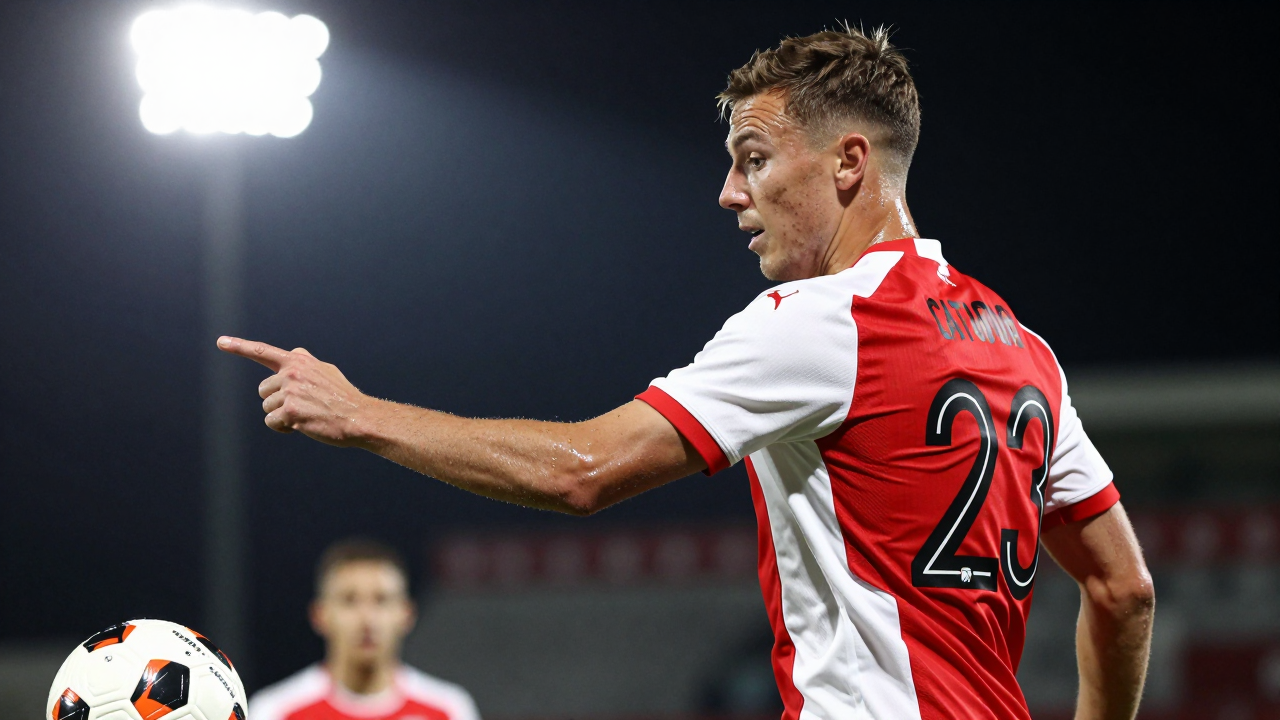

Our beloved Royal Antwerp FC, The Great Old, has recently shown resilience and quality within the squad. However, results have sometimes been inconsistent, and with the crucial phase of the League approaching, it's time for a fresh, tactical perspective. Particularly in matches where we face low blocks and compact defenses, our attacking machinery sometimes seems to falter. It's not a lack of effort, but rather a challenge to find the right keys to unlock the opponent's goal.
When opponents retreat with eleven men behind the ball, we often observe that our build-up play becomes too predictable. The ball often circulates safely around the defense and midfield, but penetration into dangerous areas is lacking. Our wingers sometimes find themselves in isolated positions, forcing them into individual actions against multiple defenders, or predictable crosses that are easily intercepted. The lack of dynamic, unexpected off-the-ball movements, especially in the final third, makes it too comfortable for opponents to keep their lines tight. Consequently, the lone striker is often not adequately supplied with usable balls.
A crucial adjustment could lie in the dynamics of our midfield. Instead of two defensive midfielders remaining too static, we could consider giving one of them more freedom to make deeper runs into the attack. A well-timed run from the 'number 8' zone can disorganize the opponent's defensive line, create space for other players, and provide an extra passing option in the box. This would, however, require excellent coordination with the remaining midfielder and central defenders to maintain balance upon losing possession. This vertical threat can make our attack more unpredictable.
Furthermore, we can utilize the width of the field even more efficiently. Constant positional interchange between wingers and overlapping full-backs can sow confusion among opponents. Imagine a winger who moves inside early, creating space on the flank for a quick, overlapping full-back. Or, conversely, a full-back who stays high while the winger cuts inside to overload the central axis. These flexible roles offer more variation than just the 'standard' cross from the byline. Also, employing short combination passes around the penalty area, followed by a quick through ball, can work wonders against a compact wall.
The goal is to offer more 'puzzle pieces' so that opponents don't know where the danger will originate. Variation in attacking patterns, more rotational movement, and daring to take calculated risks in the build-up are essential. It's a delicate balance: The Great Old must not lose its defensive stability, but offensively, it needs to step up a gear to secure those crucial points. With the quality we possess, and with a few well-considered tactical refinements, Stamnummer 1 can undoubtedly find its way back to the top and treat its fans to more goals and victories in our beloved Stadium. The Bosuil awaits.